- Personal Watercraft Engines, Impellers & Components Parts
- sku: 11042159625821008
- SEA DOO 420818955
420818955 SEA-DOO Engine Crankshaft Balancer Balance Shaft Xp
fits model: Xp, Di. make: Sea-doo. year: 2003–2004.
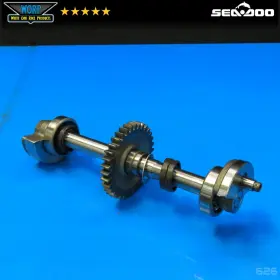
| Manufacturer Part Number | 420818955 |
|---|---|
| Type | ENGINE |
Review SEA-DOO Engine Crankshaft Balancer Balance Shaft Genuine Oem for SEA-DOO XP DI 2003–2004
Sea-Doo XP DI Engine Crankshaft Balancer (2003-2004) - Part No. 420818955
Description:The Sea-Doo XP DI Engine Crankshaft Balancer, part number 420818955, is an essential component designed for the 2003 and 2004 Sea-Doo XP DI (Direct Injection) engines. This engine component is responsible for addressing the vibrations and imbalances that can occur during the engine's operation, ensuring smooth and efficient performance.
The crankshaft balancer, or balance shaft, is a mechanical assembly consisting of counterweights and balancing rods. Its primary function is to offset the reciprocating mass of the pistons and connecting rods, which helps minimize the unwanted vibrations and engine harmonic forces. By doing so, the crankshaft balancer contributes to a more comfortable riding experience and reduces the overall load on the engine and its components.
This Sea-Doo crankshaft balancer is meticulously engineered to fit and perform with the XP DI engine perfectly. It is manufactured using high-quality materials and precise manufacturing processes to ensure the utmost durability and reliability. The balancer is designed to be a direct replacement for the worn-out or failed component in your Sea-Doo watercraft.
When you install this Sea-Doo XP DI Engine Crankshaft Balancer, you can expect a noticeable improvement in your watercraft's overall performance. The engine will run more smoothly, quietly, and efficiently, delivering a more enjoyable riding experience. Additionally, you'll likely notice a reduction in exhaust emissions and better fuel economy.
This crankshaft balancer is a crucial repair item for Sea-Doo XP DI engines produced between 2003 and 2004. If you're experiencing vibrations, rough idling, or other engine performance issues, it might be time to inspect and replace your engine's crankshaft balancer. By investing in a genuine Sea-Doo part such as this one, you can ensure the longevity and optimal operation of your watercraft's engine.
In conclusion, the Sea-Doo XP DI Engine Crankshaft Balancer, part number 420818955, is a vital component for maintaining the performance, efficiency, and longevity of your 2003 or 2004 Sea-Doo XP DI engine. By replacing a worn-out or failed crankshaft balancer with a genuine Sea-Doo part, you can enjoy a smoother, quieter, and more efficient riding experience.
Pros and Cons of Buying Sea-Doo 420818955 2003 XP DI Engine Crankshaft Balancer
1. Pros:a) Improved Engine Performance: The crankshaft balancer helps in reducing engine vibrations, leading to improved performance and better ride quality.
b) Enhanced Durability: By reducing the vibrations, the engine components can last longer, reducing the need for frequent repairs or replacements.
c) Smoother Operation: A well-balanced engine operates more smoothly, resulting in a more enjoyable and less fatiguing riding experience.
2. Cons:a) Cost: The price of a new crankshaft balancer for a Sea-Doo 2003 XP DI engine may be relatively high for some budgets, especially if the engine is no longer under warranty.
b) Installation Complexity: Depending on the mechanic's skill level and the availability of the required tools, the installation process can be complex and time-consuming.
c) Potential for Damage: During the installation or removal process, there is a risk of damaging other engine components, which could lead to additional repair costs.
3. Conclusion:The decision to buy a Sea-Doo 420818955 2003 XP DI Engine Crankshaft Balancer ultimately depends on the individual's priorities and circumstances. If you value improved engine performance, smoother operation, and enhanced durability, the investment in a new crankshaft balancer could be worthwhile. However, if the cost is a concern or the installation process seems intimidating, it may be wise to consider alternative solutions, such as addressing any performance issues through regular maintenance or seeking professional advice.
4. Recommendation:If you decide to proceed with the purchase, it is recommended to work with a reputable dealer or mechanic to ensure a proper installation. Proper installation is essential to maximize the benefits and minimize the risks associated with the replacement. Additionally, consider the potential long-term savings in reduced repair costs and improved engine life as part of your decision-making process.
Details:
specifications watercraftimp:
- for models: Xp, Di
- for makes: Sea-doo
- for years: 2003–2004
- mpn: 420818955
- type: Engine
returns watercraftimp:
- policy: returns accepted
- paid by: buyer
- time: 30 days
shipping watercraftimp:
- class: expedited
- transit: 5-11 days
- service: usps priority mail
- carrier: usps
- type: fixed
payments watercraftimp:
- credit card: visa
- wallet: google-pay
- other
seller watercraftimp:
- rating: 99.9%
- # reviews: 38880
- city: lake havasu city, arizona
offer watercraftimp:
- availability: in stock
- sold #: 9
- in stock #: 1
- price: $104.99
- item condition: Used
- options: ship-to-home
- started: june 5, 2026
general watercraftimp:
- category: Watercraft Parts > Engines > Impellers Components
Similar Items:
- Sea-doo 680034322363 Counter Balance Shaft Assembly 951 Carbureted Gsx Gtx Lrx Rx Xp Ltd For carburetor model only...(December 15th, 2023)
- Sea-doo 290913286 1989 1991 Sea-doo Sp Gt Xp Cylinder Jug Without Sleeve Oem Something has caused your electrical part to burn out. All electrical parts are tested on the machine that they were removed from. I suggest finding out what caused the part to go bad first and fix that problem before installing any good electrical component. Used oem cylinder jug without sleeve ...(December 16th, 2023)
- Sea-doo 290811421 2000 2003 Sea-doo Gtx Lrv Rx Di Ignition Cover Oem 2002 Rx di, 5586/5591/5592. 2002 Rx di Le, 5583/5584/5585. Something has caused your electrical part to burn out. 2001 TX di, 5528/5529/5540/5541. All of my parts are cleaned, tested, and physically inspected before I list them to ensure the quality. All electrical parts are tested on the ...(December 16th, 2023)
- Sea-doo 420641198 Seadoo 4 Tec Exhaust Manifold Bolt Set Stainless Steel Gtx Rxp Rxt Gti Exhaust manifold bolts from a 4TEC...(December 17th, 2023)
- Wsm 010-819-05 Piston Kit 0.50mm Oversize Sea-doo 951 Jm4 Sm 010-819-05 piston kit 0.50MM oversize sea-doo 951 JM4...(December 17th, 2023)
- Sea-doo 204170008 1996 Seadoo Speedster Oem Reverse Gate And Support Bracket Freshwater part. Part is in great condition with no major damage. I do not mark merchandise values below or items as ts. Make sure this part fits your machine before purchasing...(December 17th, 2023)
- Sea-doo 271001459 2005 Sea-doo Rxt Intake Grate Oem Freshwater part. Part is in good working order with no cracks or damage. Make sure this part fits your machine before purchasing. I do not mark merchandise values below or items as ts...(December 18th, 2023)
- Sea-doo 420834489 Seadoo 2004 04 Gtx 185 Sc 4tec Flywheel And Magneto Cup Used, oem flywheel, rector wheel, and magneto cup from a 2004 sea doo TX 185 SC 4TEC. Part number 420 834 489 flywheel, supersedes 485...(December 18th, 2023)
- Sea-doo 290811236 Seadoo Gtx Rfi 787 800 2002 Water Channel Cover Part #: sea-doo 290811236 for sale...(December 18th, 2023)
- Sea-doo 420890994 07 Sea-doo Rxt 215 4-tec Crankcase Center Crank Case Pistons And Cylinders Items are shipped using USPS, ups, and FedEx. Pistons are in good shape.: crankcase is in good condition with no cracks or repairs. Finish has light wear. Was removed from a 2007 sea-doo ext 215 4-TEC. Bearings are good. Bores have light wear and measure 100MM. Comes as pictured...(December 19th, 2023)
- Sea-doo 420889711 07 Sea-doo Rxt 215 4-tec Flywheel Magneto And Starter Gear Flywheel is in good working condition. Was removed from a 2007 sea-doo ext 215 4-TEC. Comes as pictured. Items are shipped using USPS, ups, and FedEx...(December 19th, 2023)
